
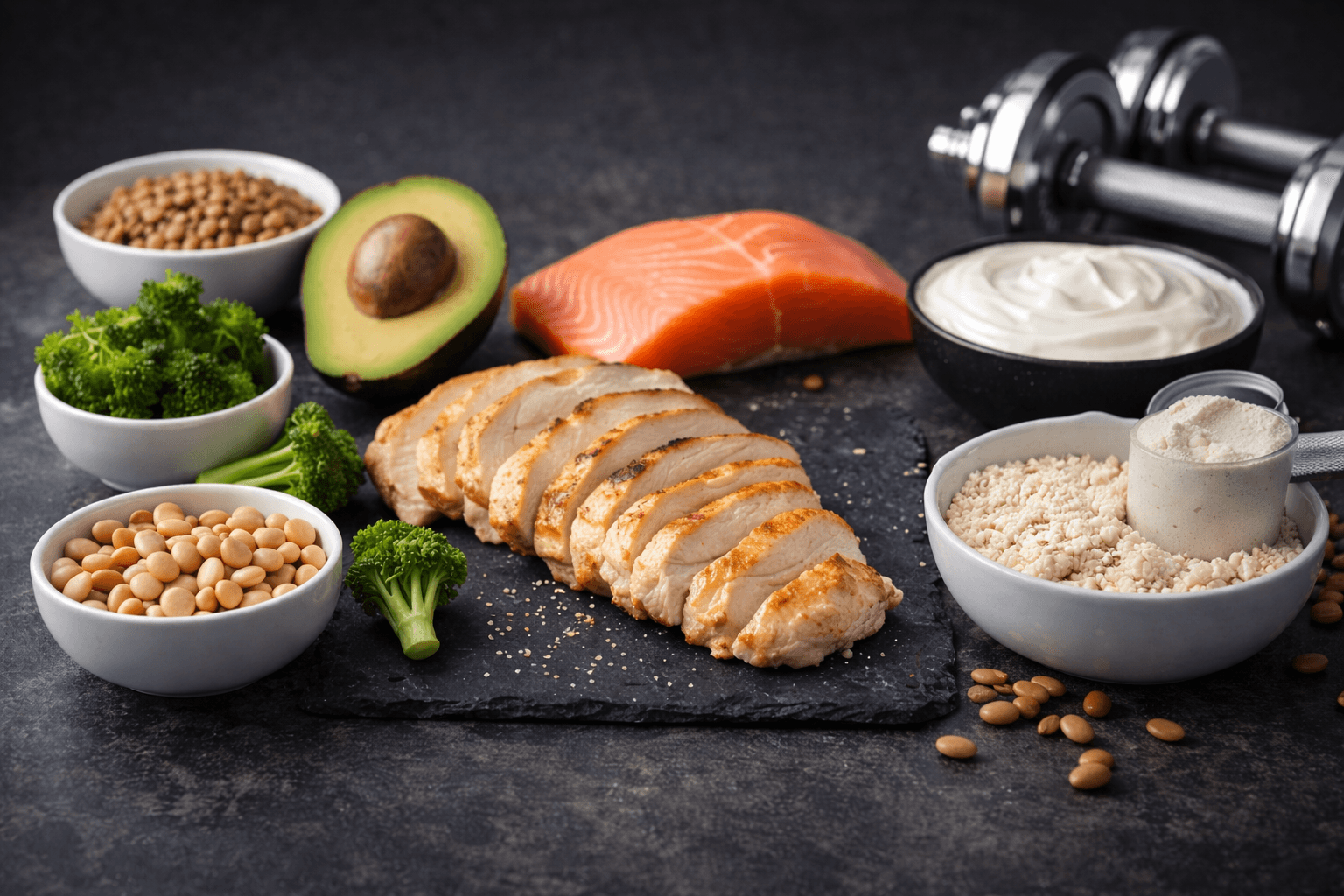
To lose weight without losing muscle: 1.8–2.2 g of protein per kg of body weight per day.
Example:
- 60 kg → 108–132 g of protein
- 80 kg → 144–176 g of protein
This is the optimal range for:
- preserving muscle mass during a calorie deficit
- increasing satiety and reducing appetite
- improving body composition
In this guide you'll find the precise calculation, real examples and how to apply it to your diet.
→ Want calories and macros calculated automatically? Nutryon Calorie Calculator →
All data is based on the Nutryon engine, designed to generate personalized nutrition plans. This approach integrates guidelines used in sports nutrition and international scientific literature.
How Much Protein Per Day to Lose Weight (Quick Answer)
| Weight | Minimum Protein | Optimal Protein |
|---|---|---|
| 50 kg | 80 g | 90–110 g |
| 60 kg | 96 g | 108–132 g |
| 70 kg | 112 g | 126–154 g |
| 80 kg | 128 g | 144–176 g |
| 90 kg | 144 g | 162–198 g |
Always use the 1.8–2.2 g/kg range for optimal results during fat loss.
These values are already optimized for a standard calorie deficit (15–25%).
The Nutryon Method for Protein Calculation
This approach uses a deterministic model based on real physiological data:
- Mifflin-St Jeor formula for basal metabolic rate
- PAL multipliers for real energy expenditure
- Adaptive protein target based on goal and activity level
- Per-meal distribution based on scientific evidence
The calculations shown are the same ones used by the Nutryon engine to generate personalized nutrition plans.
Why Protein is Essential for Losing Weight
When you're in a calorie deficit, your body needs energy. If you don't eat enough protein, it starts drawing energy from muscle mass instead of fat.
This is why many low-calorie diets produce disappointing results: people lose weight, but mostly lose muscle. The result is a flabbier body, a slower metabolism and a guaranteed yo-yo effect.
Adequate protein intake in a weight loss diet serves to:
- Preserve muscle mass during the calorie deficit
- Increase satiety — protein satisfies more than carbohydrates and fat
- Increase energy expenditure — the body uses 25–30% of protein calories just to digest them
- Support recovery after training
To correctly set your calorie deficit → read: How to Calculate Your Calorie Deficit Safely
How Much Protein to Eat to Lose Weight: The Correct Calculation
Direct formula: weight (kg) × 2.0 = grams of daily protein
The scientifically validated range for losing weight without losing muscle is 1.8–2.2 g/kg per day.
| Activity Level | Recommended Protein |
|---|---|
| Sedentary, light deficit | 1.6–1.8 g/kg |
| Active, 2–3 workouts/week | 1.8–2.0 g/kg |
| Very active, 4+ workouts/week | 2.0–2.2 g/kg |
| Aggressive deficit or athlete | 2.2–2.4 g/kg |
Real Examples from the Nutryon Engine
58 kg woman, 4 weekly workouts, fat loss goal:
- Protein:
2.2 g/kg × 58 kg = 128 g/day - Distributed across 4 meals: about 32 g per meal
82 kg man, 3 weekly workouts, weight loss goal:
- Protein:
2.0 g/kg × 82 kg = 164 g/day - Distributed across 4 meals: about 41 g per meal
In Summary
- Never drop below 1.6 g/kg during fat loss
- With 4+ weekly workouts use 2.0–2.2 g/kg
- Always calculate on current weight, not goal weight
Why This Calculation Changes from Person to Person
Protein needs are not fixed. They depend on:
- daily physical activity level
- calorie deficit intensity
- current muscle mass
- recovery quality (sleep, stress)
Concrete Example
Two people at 70 kg:
- Sedentary Person A → 1.8 g/kg = 126 g
- Person B with 5 workouts/week → 2.2 g/kg = 154 g
Difference: 28 g of protein per day
This is exactly the type of variation that a generic calculation doesn't account for. That's why Nutryon doesn't use standard values, but automatically calculates the protein target adapted to each person's real context.
How to Distribute Protein Throughout the Day
Reaching the daily total isn't enough — distribution matters.
Research shows that the body can optimally synthesize protein with 25–40 g per meal. Eating 120 g of protein in one meal is much less effective than distributing it across 4 meals of 30 g.
Ideal distribution across 4 meals for fat loss:
| Meal | Protein Source | Grams |
|---|---|---|
| Breakfast | Greek yogurt, eggs, skyr | 25–30 g |
| Lunch | Chicken, tuna, legumes | 30–35 g |
| Snack | Ricotta, skyr | 20–25 g |
| Dinner | Fish, turkey, eggs | 30–35 g |
In Summary
- Distribute protein across 4 meals throughout the day
- Each meal should contain at least 25 g of protein
- Don't concentrate everything at dinner — protein synthesis is a continuous process
Best Protein Sources for Fat Loss
During fat loss it's best to prioritize sources high in protein and low in calories.
Animal sources:
| Food | Protein per 100 g | Calories per 100 g |
|---|---|---|
| Chicken breast | 31 g | 165 kcal |
| Canned tuna (in water) | 25 g | 116 kcal |
| Skyr | 11 g | 65 kcal |
| Greek yogurt 0% | 10 g | 57 kcal |
| Egg white | 11 g | 52 kcal |
| Low-fat ricotta | 11 g | 105 kcal |
Plant sources:
| Food | Protein per 100 g cooked | Notes |
|---|---|---|
| Lentils | 9 g | Great with fiber |
| Chickpeas | 9 g | High satiety |
| Fava beans | 8 g | Seasonal |
| Tofu | 8 g | For vegetarian diets |
| Edamame | 11 g | High biological value |
Most Common Protein Mistakes During Fat Loss
Mistake 1 — Eating Too Little Protein Many people on a diet reduce everything, including protein. Result: they lose muscle instead of fat. The protein target should not be touched even when calories drop.
Mistake 2 — Concentrating Everything at Dinner Muscle protein synthesis is optimized by uniform distribution throughout the day. Recovering all protein in one meal doesn't work.
Mistake 3 — Only Counting Supplement Protein Whey protein is useful as a supplement, not a substitute. 70–80% of protein should come from real food.
Mistake 4 — Ignoring Plant Protein Legumes, tofu and soy products are valid protein sources and often more satiating thanks to their fiber content.
Mistake 5 — Not Increasing Protein with the Deficit Paradoxically, the more aggressive the caloric deficit, the higher protein needs to be. An intensive deficit requires at least 2.0–2.2 g/kg to protect muscle mass.
In Summary
- The protein target is fixed — don't reduce it when you cut calories
- Distribute evenly throughout the day
- Prioritize real food over supplements
What Research Says About Protein and Fat Loss
The most recent meta-analyses confirm that:
- A protein intake of 1.8–2.4 g/kg in a hypocaloric phase preserves significantly more lean mass compared to lower intakes (Helms 2014, Morton 2018)
- The thermic effect of protein is 25–30% — eating 100 kcal of protein "costs" 25–30 kcal in digestion
- Protein increases satiety through the release of hormones like GLP-1 and PYY, naturally reducing appetite
For the complete muscle building strategy: How to Build Muscle with Diet
Frequently Asked Questions About Protein for Fat Loss
How much protein per day for a woman to lose weight?
Depends on weight. A 60 kg woman with 3–4 weekly workouts should consume about 108–132 g of protein per day (1.8–2.2 g/kg).
How much protein per day for a man to lose weight?
An 80 kg man with moderate activity should consume about 144–176 g of protein per day. With aggressive deficit the target rises to 2.2–2.4 g/kg.
Does protein cause weight gain?
No. It's total excess calories that cause weight gain. During fat loss, a high protein intake helps preserve muscle and increases satiety.
Animal or plant protein — which is better for fat loss?
Both work. Animal protein has higher biological value, but plant protein offers additional fiber that improves satiety. The best strategy is to combine them.
How many times per day should you eat protein?
At least 3–4 times per day, with portions of 25–40 g. This distribution optimizes muscle protein synthesis and keeps satiety high throughout the day.
Calculate Exactly How Much Protein You Need
The numbers you've seen in this guide are general examples.
Your real needs depend on:
- metabolism
- daily activity
- training level
- calorie deficit intensity
Nutryon automatically calculates:
- your precise protein target
- optimal distribution across meals
- a complete meal plan ready to follow
→ Calculate your exact protein target with the Nutryon Macro Calculator.
→ Enter your data and get your personalized plan in minutes.