
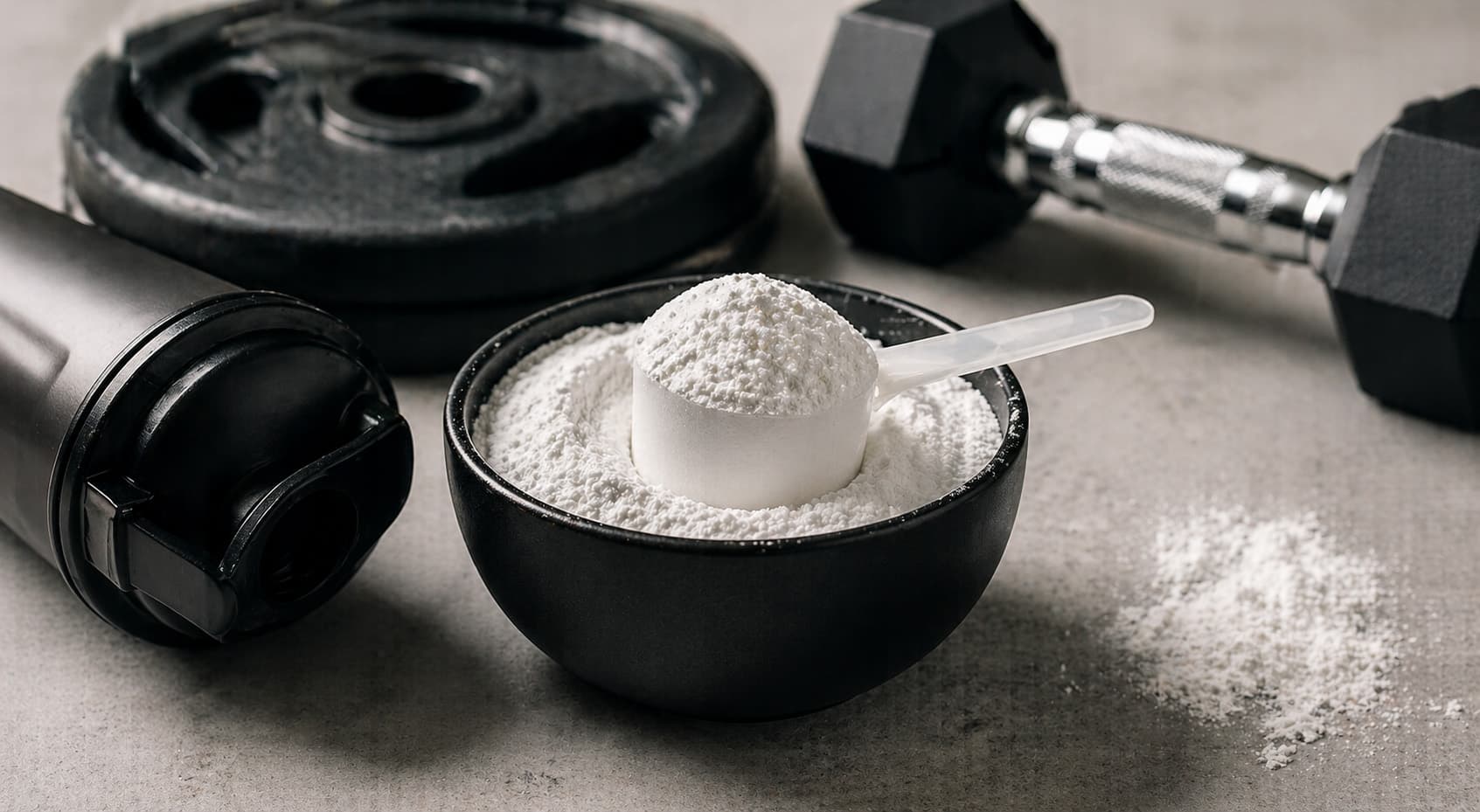
La creatina è probabilmente l'integratore sportivo più studiato in assoluto. Nonostante questo, continua a essere circondata da dubbi: gonfia? Fa male ai reni? Serve solo ai bodybuilder? È utile anche se non fai palestra?
La realtà è molto più semplice: la creatina può essere uno strumento utile per forza, performance e composizione corporea, se inserita nel contesto giusto.
Se vuoi capire prima alimentazione, calorie e macro del tuo caso reale, puoi iniziare gratis con il piano Nutryon per la massa muscolare: crea il tuo piano.
Cos'è la creatina
La creatina è una sostanza naturalmente presente nel corpo, soprattutto nei muscoli. Una parte viene prodotta internamente dal fegato e dai reni, un'altra arriva tramite alimenti come carne rossa e pesce.
Nel muscolo aiuta a rigenerare energia rapida durante sforzi intensi e brevi, ad esempio:
- serie con i pesi
- sprint e scatti ripetuti
- sport esplosivi
- qualsiasi lavoro ad alta intensità di breve durata
Perché la creatina funziona
Durante esercizi intensi il corpo consuma ATP, la "moneta energetica" cellulare. Quando l'ATP si esaurisce localmente, la performance cala.
La creatina aiuta a rigenerare ATP più rapidamente. In pratica può permettere:
- qualche ripetizione in più per serie
- migliore output di forza nei momenti decisivi
- recupero migliore tra sforzi ravvicinati
- maggior qualità allenante accumulata nel tempo
Questo è il motivo per cui spesso funziona bene nel medio-lungo periodo — non perché "fa miracoli" nei primi tre giorni.
Benefici reali della creatina
1. Maggiore forza
Molte persone notano progressi migliori su esercizi composti e multiarticolari (squat, panca, stacco). L'effetto è graduale e si consolida nelle settimane.
2. Migliore aumento di massa muscolare
Non perché costruisca muscolo da sola, ma perché può migliorare la qualità degli allenamenti — più volume, più intensità, più stimolo. Approfondimento: come aumentare la massa muscolare con l'alimentazione.
3. Recupero migliore tra sforzi intensi
Particolarmente utile in sport intermittenti (calcio, basket, tennis) dove si alternano fasi esplosive e recupero.
4. Supporto cognitivo in alcuni contesti
Tema in evoluzione scientifica, con dati interessanti soprattutto in situazioni di stress cronico, sonno ridotto o diete molto restrittive.
La creatina fa ingrassare?
No, nel senso comune del termine.
Può aumentare il peso corporeo di 1–2 kg nelle prime settimane, ma questo aumento è dovuto a maggiore ritenzione di acqua intracellulare nei muscoli — non a grasso.
È importante capire la differenza:
- +1–2 kg di acqua muscolare = normale risposta alla creatina
- +1–2 kg di grasso = richiederebbe un surplus calorico prolungato
Chi interpreta l'aumento di peso come "ingrassamento" spesso smette di assumerla per un motivo sbagliato.
La creatina fa male ai reni?
Nelle persone sane, alle dosi standard comunemente utilizzate, non esiste evidenza che la creatina causi danno renale. È uno degli aspetti più studiati proprio perché la preoccupazione è comune.
Chi ha patologie renali preesistenti, condizioni cliniche specifiche o dubbi medici deve consultare un professionista sanitario prima di integrarla.
Quale creatina scegliere
Il mercato offre molte varianti: monoidrato, etil estere, Kre-Alkalyn, HCl, buffered, micronizzata.
La forma con il miglior rapporto tra evidenza scientifica, costo e semplicità resta:
Creatina monoidrato
È la scelta più studiata, più economica e più lineare per la grande maggioranza delle persone. Le varianti premium esistono ma spesso non offrono vantaggi pratici significativi rispetto al monoidrato.
Quanta creatina assumere
Il protocollo più semplice e pratico:
3–5 g al giorno, ogni giorno
La costanza quotidiana conta molto più dell'orario preciso.
Con fase di carico (opzionale)
- 20 g/giorno divisi in 4 dosi per i primi 5–7 giorni
- poi 3–5 g/giorno di mantenimento
Permette di saturare i muscoli più rapidamente.
Senza fase di carico
- 3–5 g/giorno dalla partenza
- saturazione completa raggiunta in 3–4 settimane
Per semplicità e migliore tollerabilità digestiva, molte persone preferiscono questo approccio.
Quando prenderla
L'orario è secondario rispetto alla costanza. Qualsiasi momento è valido:
- dopo l'allenamento
- con un pasto principale
- sempre alla stessa ora della giornata
- quando ti ricordi con regolarità
Nei giorni di riposo va presa comunque — la saturazione muscolare dipende dalla costanza, non dall'allenamento.
Creatina e dimagrimento
La creatina non brucia grasso direttamente. Non è un fat burner.
Può però essere utile anche in fase di dimagrimento perché:
- aiuta a mantenere la performance durante un deficit calorico
- contribuisce a preservare la massa magra
- permette di allenarti meglio mentre dimagrisci
Approfondimento: come perdere massa grassa
Chi può beneficiarne
Molto probabilmente sì
- chi fa palestra o allenamento con i pesi
- sportivi di squadra (calcio, basket, rugby)
- chi vuole migliorare forza e composizione corporea
- vegetariani e vegani (l'introito alimentare di creatina è naturalmente più basso)
- persone over 40 impegnate nel mantenimento della massa muscolare
Meno prioritaria se
- sei completamente sedentario senza allenamento strutturato
- la dieta è ancora molto disorganizzata
- dormi poco e il recupero è trascurato
L'ordine corretto è sempre: alimentazione → allenamento → sonno → integrazione. La creatina amplifica un contesto già buono, non lo sostituisce.
Errori comuni
1. Aspettarsi risultati immediati
La creatina è uno strumento di miglioramento marginale nel tempo, non una trasformazione in tre giorni. Chi non vede nulla in una settimana spesso la abbandona troppo presto.
2. Cambiare marca o forma ogni settimana
Non è necessario. Il monoidrato di qualità è sufficiente.
3. Prenderla solo nei giorni di allenamento
Meno efficace rispetto all'assunzione quotidiana costante, inclusi i giorni di riposo.
4. Comprare forme costose senza motivo
Le varianti premium raramente giustificano il prezzo maggiore in termini di risultati pratici.
Creatina per donne
Non cambia nulla di sostanziale. I principi fisiologici sono identici. La creatina non è un integratore "da uomo" — le donne che si allenano con i pesi possono beneficiarne esattamente come gli uomini.
Creatina dopo i 40 anni
Può essere particolarmente interessante in chi segue un programma di forza e vuole contrastare la fisiologica perdita di massa magra con l'età (sarcopenia). Il contesto nutrizionale e di allenamento resta sempre la base.
Domande frequenti
Va ciclizzata (cicli on/off)?
Non obbligatoriamente. L'uso continuo è supportato dalla ricerca disponibile per chi si allena regolarmente.
Va presa con zuccheri o carboidrati?
Non necessario per la maggior parte delle persone. Questa indicazione viene da protocolli più vecchi che non sono più considerati indispensabili.
Fa cadere i capelli?
Tema spesso discusso online. Il legame con la perdita di capelli non è dimostrato come effetto automatico e generalizzato dalla ricerca attuale.
Funziona per chi non risponde (non-responder)?
Circa il 25–30% delle persone risponde poco alla creatina, probabilmente perché ha già livelli muscolari alti di base. Non è una questione di marca o forma.
Conclusione
La creatina è uno degli integratori con più solide basi scientifiche disponibili. Non sostituisce allenamento e alimentazione corretta, ma può migliorare i risultati se il contesto è già ben strutturato.
L'ordine delle priorità rimane sempre:
- calorie corrette per il tuo obiettivo
- proteine adeguate
- allenamento coerente e progressivo
- sonno e recupero
- creatina come supporto marginale utile
Se vuoi capire prima il tuo piano reale di calorie, macro e obiettivo, puoi iniziare gratis con Nutryon: crea il tuo piano personalizzato.