
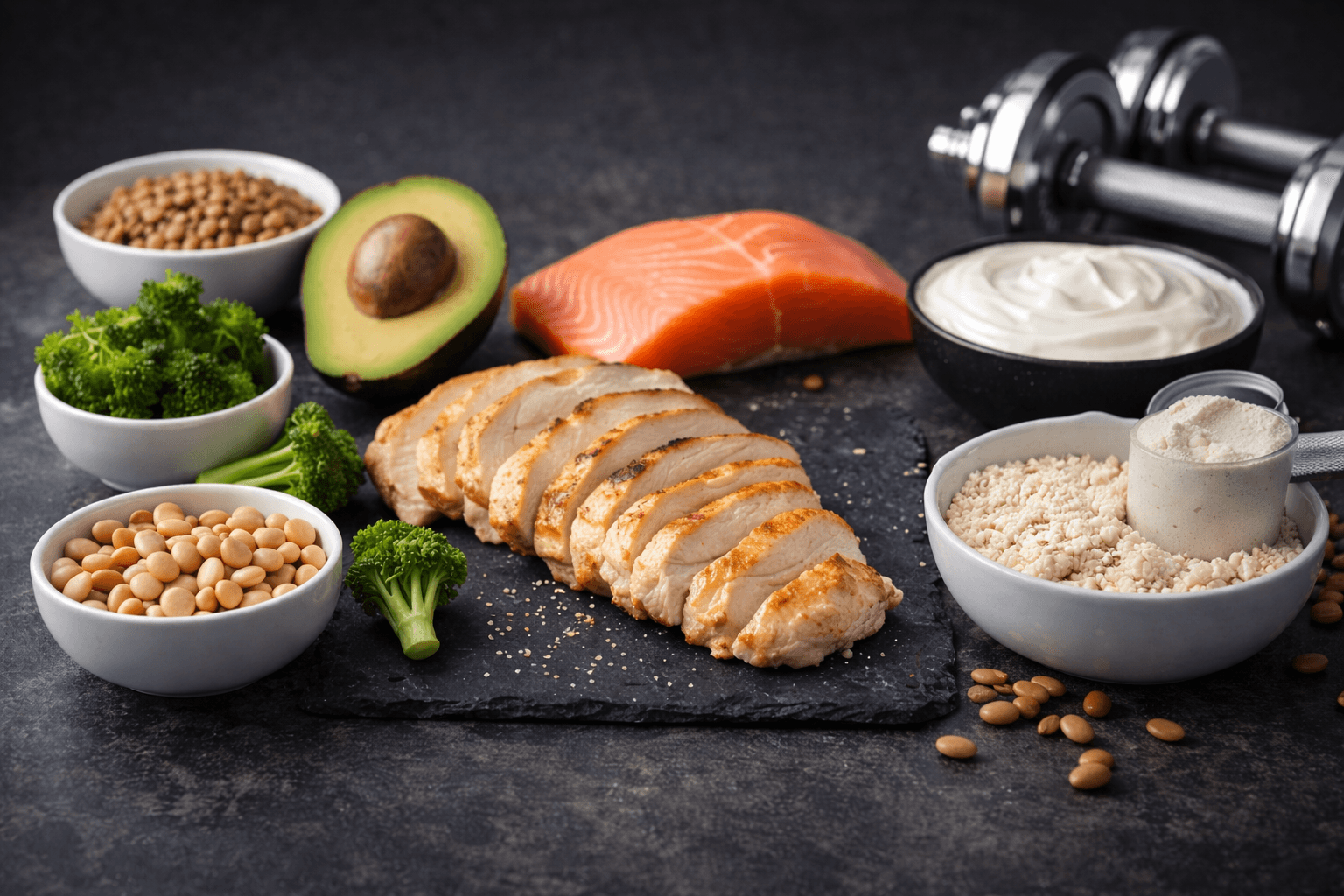
Per dimagrire senza perdere muscolo: 1.8–2.2 g di proteine per kg di peso corporeo al giorno.
Esempio:
- 60 kg → 108–132 g di proteine
- 80 kg → 144–176 g di proteine
Questo è il range ottimale per:
- preservare la massa muscolare durante il deficit calorico
- aumentare la sazietà e ridurre l'appetito
- migliorare la composizione corporea
In questa guida trovi il calcolo preciso, esempi reali e come applicarlo nella tua dieta.
→ Calcola subito il tuo fabbisogno proteico con il Macro Calculator Nutryon — gratuito.
Tutti i dati sono basati sul motore Nutryon, progettato per generare piani nutrizionali personalizzati. Questo approccio integra linee guida utilizzate in nutrizione sportiva e letteratura scientifica internazionale.
Quante proteine al giorno per dimagrire (risposta veloce)
| Peso | Proteine minime | Proteine ottimali |
|---|---|---|
| 50 kg | 80 g | 90–110 g |
| 60 kg | 96 g | 108–132 g |
| 70 kg | 112 g | 126–154 g |
| 80 kg | 128 g | 144–176 g |
| 90 kg | 144 g | 162–198 g |
Usa sempre il range 1.8–2.2 g/kg per risultati ottimali in fase di dimagrimento.
Questi valori sono già ottimizzati per un deficit calorico standard (15–25%).
Metodo Nutryon per il calcolo proteico
Questo approccio utilizza un modello deterministico basato su dati fisiologici reali:
- Formula Mifflin-St Jeor per il metabolismo basale
- Moltiplicatori PAL per il dispendio energetico reale
- Target proteico adattivo in base a obiettivo e livello di attività
- Distribuzione per pasto basata su evidenze scientifiche
I calcoli mostrati sono gli stessi utilizzati dal motore Nutryon per generare piani nutrizionali personalizzati.
Perché le proteine sono fondamentali per dimagrire
Quando sei in deficit calorico, il corpo ha bisogno di energia. Se non mangi abbastanza proteine, inizia a ricavare energia dalla massa muscolare invece che dal grasso.
Questo è il motivo per cui molte diete ipocaloriche producono risultati deludenti: le persone perdono peso, ma perdono soprattutto muscolo. Il risultato è un corpo più flaccido, un metabolismo più lento e un effetto yo-yo garantito.
Un apporto proteico adeguato nella dieta per dimagrire serve a:
- Preservare la massa muscolare durante il deficit calorico
- Aumentare il senso di sazietà — le proteine saziano più di carboidrati e grassi
- Aumentare il dispendio energetico — il corpo usa il 25–30% delle calorie proteiche solo per digerirle
- Supportare il recupero dopo l'allenamento
Per impostare correttamente il deficit calorico → leggi: Come calcolare il deficit calorico in modo sicuro
Quante proteine mangiare per dimagrire: il calcolo corretto
Formula diretta: peso (kg) × 2.0 = grammi di proteine giornaliere
Il range scientifico validato per dimagrire senza perdere muscolo è 1.8–2.2 g/kg al giorno.
| Livello di attività | Proteine consigliate |
|---|---|
| Sedentario, deficit leggero | 1.6–1.8 g/kg |
| Attivo, 2–3 allenamenti/settimana | 1.8–2.0 g/kg |
| Molto attivo, 4+ allenamenti/settimana | 2.0–2.2 g/kg |
| Deficit aggressivo o atleta | 2.2–2.4 g/kg |
Esempi reali dal motore Nutryon
Donna 58 kg, 4 allenamenti settimanali, obiettivo perdita massa grassa:
- Proteine:
2.2 g/kg × 58 kg = 128 g/giorno - Distribuite su 4 pasti: circa 32 g per pasto
Uomo 82 kg, 3 allenamenti settimanali, obiettivo dimagrimento:
- Proteine:
2.0 g/kg × 82 kg = 164 g/giorno - Distribuite su 4 pasti: circa 41 g per pasto
In sintesi
- Non scendere mai sotto 1.6 g/kg in fase di dimagrimento
- Con 4+ allenamenti settimanali usa 2.0–2.2 g/kg
- Calcola sempre sul peso attuale, non sul peso obiettivo
Perché questo calcolo cambia in base alla persona
Il fabbisogno proteico non è fisso. Dipende da:
- livello di attività fisica quotidiana
- intensità del deficit calorico
- massa muscolare attuale
- qualità del recupero (sonno, stress)
Esempio concreto
Due persone da 70 kg:
- Persona A sedentaria → 1.8 g/kg = 126 g
- Persona B con 5 allenamenti/settimana → 2.2 g/kg = 154 g
Differenza: 28 g di proteine al giorno
Questo è esattamente il tipo di variazione che un calcolo generico non considera. È per questo che Nutryon non usa valori standard, ma calcola automaticamente il target proteico adattato al contesto reale di ogni persona.
Come distribuire le proteine durante la giornata
Non basta raggiungere il totale giornaliero — la distribuzione conta.
La ricerca mostra che il corpo può sintetizzare proteine in modo ottimale con 25–40 g per pasto. Mangiare 120 g di proteine in un solo pasto è molto meno efficace che distribuirle in 4 pasti da 30 g.
Distribuzione ideale su 4 pasti per dimagrire:
| Pasto | Fonte proteica | Grammi |
|---|---|---|
| Colazione | Yogurt greco, uova, skyr | 25–30 g |
| Pranzo | Pollo, tonno, legumi | 30–35 g |
| Spuntino | Ricotta, skyr | 20–25 g |
| Cena | Pesce, tacchino, uova | 30–35 g |
In sintesi
- Distribuisci le proteine in 4 pasti durante la giornata
- Ogni pasto deve contenere almeno 25 g di proteine
- Non concentrare tutto a cena — la sintesi proteica è un processo continuo
Le migliori fonti proteiche per dimagrire
In fase di dimagrimento conviene privilegiare fonti ad alto contenuto proteico e basso contenuto calorico.
Fonti animali:
| Alimento | Proteine per 100 g | Calorie per 100 g |
|---|---|---|
| Petto di pollo | 31 g | 165 kcal |
| Tonno al naturale | 25 g | 116 kcal |
| Skyr | 11 g | 65 kcal |
| Yogurt greco 0% | 10 g | 57 kcal |
| Albume d'uovo | 11 g | 52 kcal |
| Ricotta magra | 11 g | 105 kcal |
Fonti vegetali:
| Alimento | Proteine per 100 g cotti | Note |
|---|---|---|
| Lenticchie | 9 g | Ottime con fibre |
| Ceci | 9 g | Alta sazietà |
| Fave | 8 g | Stagionali |
| Tofu | 8 g | Per diete vegetariane |
| Edamame | 11 g | Alto valore biologico |
Gli errori più comuni sulle proteine in fase di dimagrimento
Errore 1 — Mangiare troppe poche proteine Molte persone in dieta riducono tutto, incluse le proteine. Risultato: perdono muscolo invece di grasso. Il target proteico non va toccato anche quando le calorie scendono.
Errore 2 — Concentrare tutto a cena La sintesi proteica muscolare è ottimizzata dalla distribuzione uniforme durante la giornata. Recuperare tutte le proteine in un solo pasto non funziona.
Errore 3 — Contare solo le proteine degli integratori La whey protein è utile come integrazione, non come sostituto. Il 70–80% delle proteine deve venire dal cibo reale.
Errore 4 — Ignorare le proteine vegetali Legumi, tofu e derivati della soia sono fonti proteiche valide e spesso più sazianti grazie alla presenza di fibre.
Errore 5 — Non aumentare le proteine con il deficit Paradossalmente, più il deficit calorico è aggressivo, più le proteine devono essere alte. Un deficit intensivo richiede almeno 2.0–2.2 g/kg per proteggere la massa muscolare.
In sintesi
- Il target proteico è fisso — non ridurlo quando tagli le calorie
- Distribuisci uniformemente durante la giornata
- Privilegia fonti reali rispetto agli integratori
Proteine e dimagrimento: cosa dice la ricerca
Le meta-analisi più recenti confermano che:
- Un apporto proteico di 1.8–2.4 g/kg in fase ipocalorica preserva significativamente più massa magra rispetto ad apporti inferiori (Helms 2014, Morton 2018)
- L'effetto termico delle proteine è del 25–30% — mangiare 100 kcal di proteine ne "costa" 25–30 in digestione
- Le proteine aumentano la sazietà attraverso il rilascio di ormoni come GLP-1 e PYY, riducendo naturalmente l'appetito
Per approfondire la strategia completa di aumento massa muscolare: Come aumentare la massa muscolare con l'alimentazione
Domande frequenti sulle proteine per dimagrire
Quante proteine al giorno per dimagrire una donna?
Dipende dal peso. Una donna di 60 kg con 3–4 allenamenti settimanali dovrebbe assumere circa 108–132 g di proteine al giorno (1.8–2.2 g/kg).
Quante proteine al giorno per dimagrire un uomo?
Un uomo di 80 kg con attività moderata dovrebbe assumere circa 144–176 g di proteine al giorno. Con deficit aggressivo il target sale a 2.2–2.4 g/kg.
Le proteine fanno ingrassare?
No. Sono le calorie totali in eccesso a causare aumento di peso. In fase di dimagrimento, un alto apporto proteico aiuta a preservare il muscolo e aumenta il senso di sazietà.
Meglio proteine animali o vegetali per dimagrire?
Entrambe funzionano. Le proteine animali hanno un valore biologico più alto, ma le proteine vegetali offrono fibre aggiuntive che migliorano la sazietà. La strategia migliore è combinarle.
Quante volte al giorno mangiare proteine?
Almeno 3–4 volte al giorno, con porzioni da 25–40 g. Questa distribuzione ottimizza la sintesi proteica muscolare e mantiene alto il senso di sazietà.
Calcola esattamente quante proteine ti servono
I numeri che hai visto in questa guida sono esempi generali.
Il tuo fabbisogno reale dipende da:
- metabolismo
- attività quotidiana
- livello di allenamento
- intensità del deficit calorico
Nutryon calcola automaticamente:
- il tuo target proteico preciso
- la distribuzione ottimale nei pasti
- un piano alimentare completo già pronto
→ Inserisci i tuoi dati e ottieni il tuo piano personalizzato in pochi minuti.
O inizia dal fabbisogno calorico con il Calorie Calculator Nutryon.