
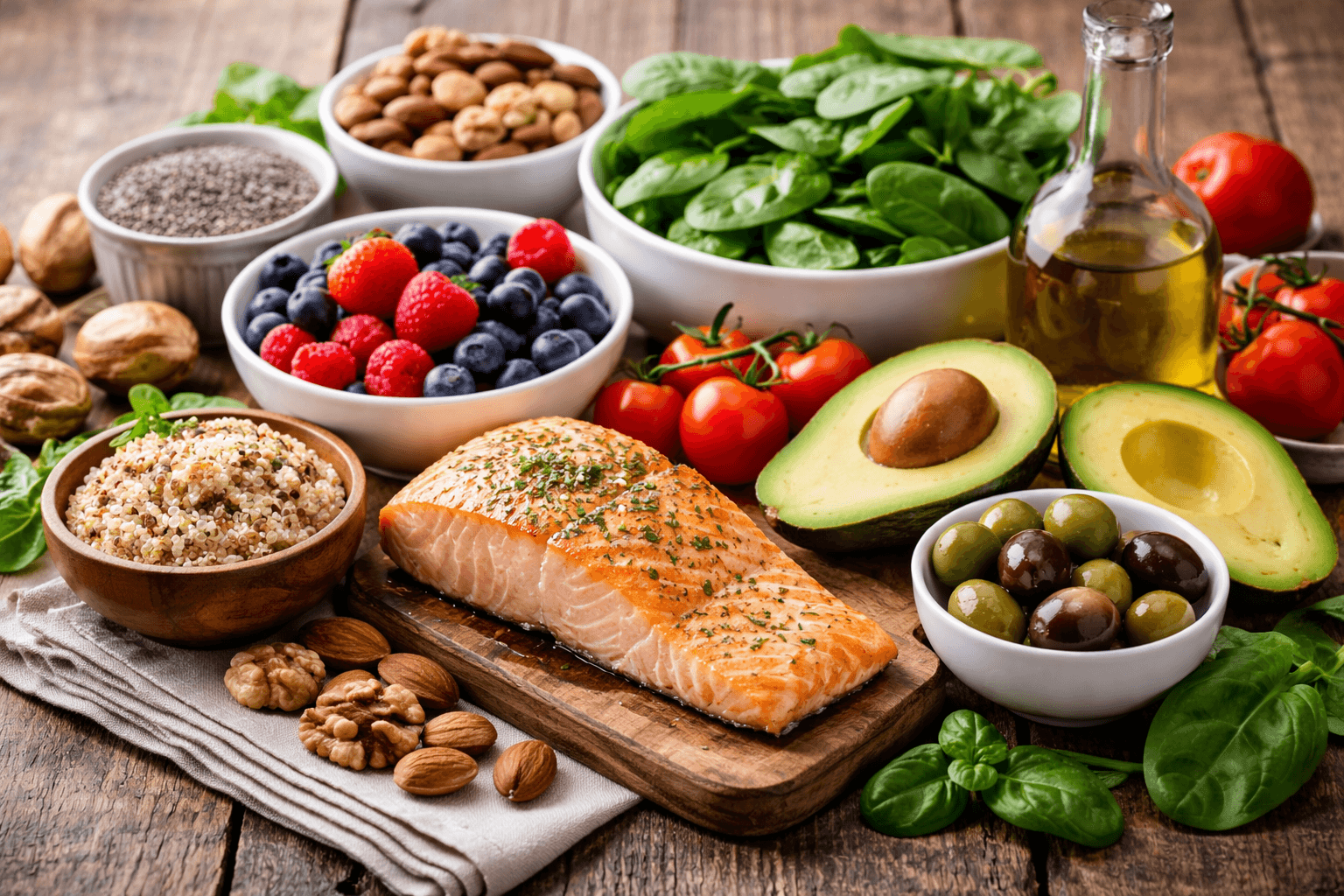
La nutrizione per la longevità si basa su 4 fattori chiave: calorie calibrate, proteine adeguate, grassi anti-infiammatori e alta densità nutrizionale.
La regola chiave:
- Proteine alte — per preservare la massa muscolare nel tempo
- Calorie moderate — mai in eccesso cronico, mai in deficit estremo
- Fibre elevate — per la salute intestinale e metabolica
- Grassi di qualità — omega-3, olio EVO, noci
In questa guida trovi:
- i nutrienti chiave per la dieta longevità
- come calibrare le calorie per la salute a lungo termine
- i pattern alimentari più studiati per vivere più a lungo
- un piano alimentare concreto con calcoli reali
Tutti i dati sono basati sul motore Nutryon, progettato per generare piani nutrizionali personalizzati. Questo approccio integra linee guida utilizzate in nutrizione preventiva e letteratura scientifica internazionale.
Cosa mangiare per vivere più a lungo (risposta veloce)
| Obiettivo | Strategia nutrizionale | Evidenza |
|---|---|---|
| Preservare massa muscolare | 1.6–2.2 g/kg proteine | Associata a riduzione del rischio di sarcopenia |
| Ridurre infiammazione cronica | Omega-3, verdure, olio EVO | Associata a migliore salute cardiovascolare |
| Stabilità metabolica | Calorie calibrate al TDEE | Associata a prevenzione del diabete tipo 2 |
| Salute intestinale | 25–35 g fibre/giorno | Associata a riduzione del rischio di malattie croniche |
| Densità ossea | Calcio + vitamina D | Associata a prevenzione dell'osteoporosi |
Questi valori sono basati su meta-analisi longitudinali su popolazioni adulte e anziane.
Metodo Nutryon per la nutrizione longevità
Questo approccio utilizza un modello deterministico basato su dati fisiologici reali:
- Formula Mifflin-St Jeor per il metabolismo basale adattato all'età
- Moltiplicatori PAL per il dispendio energetico reale
- Target proteico progressivo per preservare la massa muscolare nel tempo
- Distribuzione dei macronutrienti basata su evidenze di nutrizione preventiva
A differenza dei calcolatori standard, Nutryon non usa formule statiche ma integra età, composizione corporea e contesto metabolico per generare target adattivi personalizzati.
I calcoli mostrati sono gli stessi utilizzati dal motore Nutryon per generare piani nutrizionali personalizzati.
Perché l'alimentazione è il fattore più controllabile per la longevità
Di tutti i fattori che influenzano la durata e la qualità della vita, l'alimentazione è quello su cui hai più controllo diretto.
La ricerca epidemiologica mostra che:
- Una quota rilevante delle malattie croniche è direttamente correlata a pattern alimentari scorretti
- La massa muscolare è tra i predittori più forti di sopravvivenza dopo i 60 anni
- L'infiammazione cronica di basso grado — alimentata da diete povere di nutrienti — è associata ad accelerazione dell'invecchiamento cellulare
- La variabilità glicemica è associata a declino cognitivo accelerato nel lungo periodo
Per impostare correttamente il tuo fabbisogno calorico → leggi: Come calcolare il deficit calorico in modo sicuro
Quante calorie mangiare nella dieta per la longevità
Formula diretta: TDEE reale − 10/15% per restrizione calorica moderata
La restrizione calorica moderata — non la dieta drastica — è uno dei meccanismi più studiati per la salute a lungo termine.
| Profilo | TDEE stimato | Target dieta longevità |
|---|---|---|
| Donna 55 anni, sedentaria | 1.650 kcal | 1.400–1.500 kcal |
| Donna 55 anni, attiva | 1.950 kcal | 1.650–1.750 kcal |
| Uomo 55 anni, sedentario | 1.950 kcal | 1.650–1.750 kcal |
| Uomo 55 anni, attivo | 2.300 kcal | 1.950–2.100 kcal |
Esempio reale dal motore Nutryon
Uomo 58 anni, 78 kg, 176 cm, lavoro sedentario, 2 passeggiate settimanali:
- BMR:
10 × 78 + 6.25 × 176 − 5 × 58 + 5 = 1.655 kcal - TDEE:
1.655 × 1.3 = 2.151 kcal - Target dieta longevità: 1.830–1.940 kcal/giorno (−10/15%)
In sintesi
- Non serve una dieta drastica — una riduzione del 10–15% è sufficiente
- Le calorie devono essere calibrate sul tuo TDEE reale, non su un valore generico
- Sotto le 1.400 kcal per le donne e 1.600 per gli uomini si rischia carenza di micronutrienti
I nutrienti chiave per l'alimentazione anti-invecchiamento
Proteine — il nutriente più sottovalutato dopo i 40 anni
Dopo i 40 anni il corpo diventa progressivamente meno efficiente nel sintetizzare proteine muscolari. Questo processo — chiamato sarcopenia — tende ad accelerare con l'età e riduce significativamente la qualità della vita.
Target proteico nell'alimentazione anti-invecchiamento:
| Età | Proteine consigliate |
|---|---|
| 18–40 anni | 1.6–1.8 g/kg |
| 40–60 anni | 1.8–2.0 g/kg |
| Oltre 60 anni | 2.0–2.2 g/kg |
Con 78 kg e 58 anni: 140–156 g di proteine al giorno
Per approfondire il calcolo proteico → leggi: Quante proteine mangiare al giorno per dimagrire
Omega-3 — l'anti-infiammatorio naturale
Gli omega-3 EPA e DHA sono associati a riduzione dell'infiammazione sistemica, protezione cardiovascolare e supporto della funzione cognitiva.
Target: 1–2 g EPA+DHA al giorno
| Fonte | Omega-3 per 100 g |
|---|---|
| Sgombro | 2.0–2.5 g |
| Salmone | 1.5–2.0 g |
| Sardine | 1.0–1.5 g |
| Semi di chia | 2.5 g ALA |
Fibre — dieta longevità e salute intestinale
Il microbioma intestinale è associato alla salute immunitaria, metabolica e cognitiva. Un apporto adeguato di fibre alimenta i batteri benefici.
Target: 25–35 g di fibre al giorno
| Alimento | Fibre per 100 g |
|---|---|
| Fiocchi d'avena | 10 g |
| Lenticchie cotte | 8 g |
| Ceci cotti | 7 g |
| Avocado | 7 g |
| Broccoli | 3 g |
| Mele con buccia | 2.4 g |
Micronutrienti per vivere più a lungo
| Micronutriente | Funzione | Fonti principali |
|---|---|---|
| Vitamina D | Osso, immunità, ormoni | Salmone, uova, sole |
| Magnesio | Sonno, muscoli, insulina | Noci, legumi, verdure |
| Zinco | Immunità, testosterone | Carne, semi di zucca |
| Vitamina C | Antiossidante, collagene | Agrumi, peperoni, kiwi |
| Polifenoli | Anti-infiammatori | Olio EVO, frutti rossi, tè verde |
Perché il fabbisogno nutrizionale cambia con l'età
Il fabbisogno nutrizionale non è statico. Con l'avanzare dell'età cambiano:
- la capacità di sintetizzare proteine muscolari
- l'efficienza nell'assorbire vitamina D, B12 e calcio
- il metabolismo basale
- la sensibilità insulinica in assenza di attività fisica
Esempio concreto
Due persone da 78 kg:
- Persona A, 35 anni, attiva → proteine: 1.8 g/kg = 140 g
- Persona B, 60 anni, sedentaria → proteine: 2.2 g/kg = 172 g
Differenza: 32 g di proteine al giorno — nonostante lo stesso peso.
Questo è esattamente il tipo di variazione che un piano generico non considera. A differenza dei calcolatori standard, Nutryon calcola il target nutrizionale adattato all'età e al contesto metabolico reale di ogni persona.
I pattern alimentari più studiati per la dieta longevità
Dieta Mediterranea
Il pattern alimentare più studiato al mondo per vivere più a lungo. Caratteristiche principali:
- Olio extravergine di oliva come grasso principale
- Abbondanza di verdure, legumi, cereali integrali
- Pesce 2–3 volte a settimana
- Carne rossa limitata a 1–2 volte a settimana
- Frutta fresca come dessert
Lo studio PREDIMED ha osservato una significativa riduzione del rischio di eventi cardiovascolari nei gruppi che seguivano questo pattern.
Dieta MIND
Combinazione di dieta mediterranea e DASH, specificamente studiata per la salute cognitiva e la prevenzione del declino neurologico.
Alimenti prioritari:
- Verdure a foglia verde — almeno 6 porzioni a settimana
- Frutti di bosco — almeno 2 porzioni a settimana
- Noci — almeno 5 porzioni a settimana
- Olio EVO come grasso principale
- Pesce almeno 1 volta a settimana
Restrizione calorica moderata
Una riduzione del 10–20% delle calorie rispetto al TDEE — senza malnutrizione — è associata all'attivazione di percorsi molecolari che rallentano l'invecchiamento cellulare.
Attenzione: la restrizione calorica senza adeguato apporto proteico accelera la perdita muscolare. Le proteine devono rimanere alte anche in ipocalorica.
Piano alimentare per la longevità: esempio completo
Questo schema è pensato per un adulto di 55–65 anni, moderatamente attivo, con obiettivo di salute a lungo termine.
Profilo: uomo 60 anni, 78 kg, 1.900 kcal target
Colazione Fiocchi d'avena 60 g + yogurt greco 200 g + frutti di bosco 100 g + noci 20 g → 520 kcal · 28 g proteine · 58 g carboidrati · 18 g grassi · 8 g fibre
Pranzo Lenticchie 150 g + salmone 150 g + verdure miste + olio EVO 15 g + pane integrale 40 g → 620 kcal · 48 g proteine · 52 g carboidrati · 22 g grassi · 12 g fibre
Spuntino Mela + mandorle 30 g + tè verde → 220 kcal · 6 g proteine · 25 g carboidrati · 14 g grassi · 4 g fibre
Cena Petto di pollo 180 g + broccoli al vapore 250 g + patate dolci 150 g + olio EVO 10 g → 540 kcal · 48 g proteine · 42 g carboidrati · 14 g grassi · 9 g fibre
Totale: 1.900 kcal · 130 g proteine · 177 g carboidrati · 68 g grassi · 33 g fibre
Gli errori più comuni nell'alimentazione anti-invecchiamento
Errore 1 — Tagliare le proteine dopo i 50 anni Molte persone riducono la carne e le proteine con l'età per "mangiare leggero". È controproducente: proprio dopo i 50 anni il fabbisogno proteico aumenta per contrastare la perdita muscolare legata all'età.
Errore 2 — Focalizzarsi solo sulle calorie Mangiare poco non basta — la qualità nutrizionale conta quanto la quantità. Un piano da 1.600 kcal ricco di alimenti ultra-processati è meno efficace di 1.900 kcal di alimenti integrali.
Errore 3 — Ignorare i grassi sani I grassi insaturi sono fondamentali per la salute cardiovascolare e cognitiva. Olio EVO, pesce grasso e frutta secca non vanno eliminati.
Errore 4 — Sottovalutare le fibre La maggior parte degli adulti assume 12–15 g di fibre al giorno invece dei 25–35 g raccomandati. Le fibre alimentano il microbioma, modulano l'infiammazione e stabilizzano la glicemia.
Errore 5 — Non adattare il piano all'età Un piano nutrizionale per la longevità a 40 anni è diverso da quello a 60 anni. Il metabolismo cambia, l'assorbimento dei nutrienti cambia, le priorità cambiano.
In sintesi
- Le proteine vanno aumentate con l'età, non ridotte
- La qualità degli alimenti conta quanto le calorie
- Grassi sani e fibre sono pilastri della dieta longevità
Cosa dice la ricerca sulla nutrizione per vivere più a lungo
- Le popolazioni delle Zone Blu — Sardegna, Okinawa, Loma Linda — condividono diete ricche di legumi, verdure e proteine prevalentemente vegetali con apporto calorico moderato
- Lo studio PREDIMED ha osservato nei partecipanti che seguivano la dieta mediterranea una significativa riduzione del rischio di eventi cardiovascolari maggiori rispetto al gruppo di controllo
- Studi longitudinali mostrano che un apporto adeguato di fibre alimentari è associato a riduzione del rischio di mortalità totale
- La ricerca sulla restrizione calorica moderata indica attivazione di meccanismi di autofagia cellulare associati al rallentamento dell'invecchiamento biologico
Domande frequenti sulla dieta longevità
Quale dieta fa vivere più a lungo?
Non esiste una singola dieta "perfetta" per la longevità. I pattern più studiati — dieta mediterranea, MIND e diete delle Zone Blu — condividono caratteristiche comuni: abbondanza di vegetali, legumi, grassi sani, proteine moderate e limitazione di alimenti ultra-processati.
Quante proteine mangiare per la longevità dopo i 60 anni?
Dopo i 60 anni il fabbisogno proteico è associato a 2.0–2.2 g/kg per contrastare la perdita muscolare legata all'età. Con 70 kg significa 140–154 g di proteine al giorno.
Il digiuno intermittente è utile per la longevità?
La ricerca mostra un'associazione con l'attivazione di meccanismi cellulari legati alla longevità. Tuttavia in età avanzata il rischio di perdita muscolare è elevato — il digiuno intermittente deve essere combinato con un adeguato apporto proteico nei pasti.
Quali integratori sono utili per vivere più a lungo?
I più supportati dalla ricerca sono: vitamina D3, omega-3 EPA+DHA, magnesio bisglicinato e vitamina B12. La necessità di integrazione dipende dalla dieta e dal contesto individuale — è sempre preferibile valutarla con un professionista.
Quanto conta l'alimentazione rispetto all'esercizio per la longevità?
Entrambi sono fondamentali e sinergici. La combinazione di alimentazione ottimale e attività fisica regolare produce benefici significativamente maggiori rispetto a ciascuno dei due fattori da solo.
Costruisci il tuo piano nutrizionale per la longevità
I numeri che hai visto in questa guida sono esempi generali.
Il tuo piano ottimale per la longevità dipende da:
- età e metabolismo attuale
- livello di attività fisica
- composizione corporea
- eventuali condizioni cliniche
Nutryon calcola automaticamente:
- il tuo fabbisogno calorico reale adattato all'età
- il target proteico per preservare la massa muscolare
- la distribuzione dei macronutrienti ottimizzata
- un piano alimentare settimanale completo
→ Inserisci i tuoi dati e ottieni il tuo piano nutrizionale per la longevità calcolato su metabolismo reale, età e obiettivo — già pronto da seguire.