
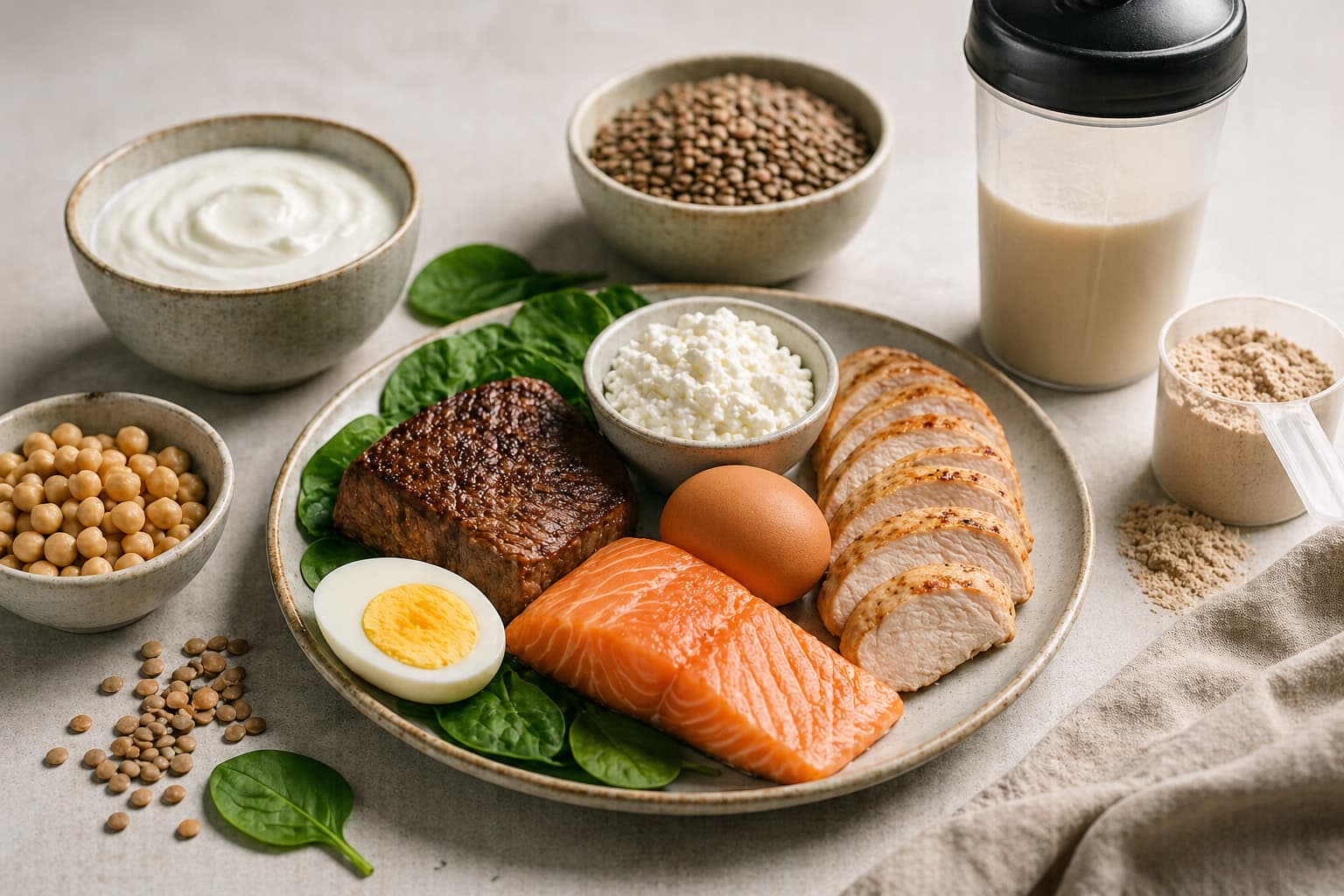
Se stai cercando di perdere grasso corporeo, le proteine sono uno dei nutrienti più importanti da gestire bene. Non fanno "dimagrire magicamente", ma possono rendere il percorso molto più efficace: aiutano a preservare la massa muscolare, aumentano la sazietà e rendono più sostenibile un deficit calorico.
Molte persone però commettono lo stesso errore: mangiano troppo poche proteine mentre tagliano calorie. Il risultato spesso è fame continua, perdita di tono muscolare e aderenza scarsa alla dieta.
Se vuoi capire quante calorie e quante proteine servono davvero nel tuo caso, puoi iniziare dal nostro calcolatore gratuito del fabbisogno calorico.
Perché le proteine aiutano nel dimagrimento
Quando dimagrisci, il corpo perde peso totale. Questo peso può arrivare da:
- massa grassa
- acqua
- glicogeno
- massa magra (muscolo)
L'obiettivo corretto non è solo perdere chili, ma perdere soprattutto grasso mantenendo il più possibile la massa muscolare.
Preservano il muscolo durante il deficit calorico
Se mangi poco e assumi poche proteine, il rischio di perdere massa magra aumenta significativamente. Le proteine forniscono gli aminoacidi necessari per mantenere e riparare il tessuto muscolare anche in fase ipocalorica.
Aumentano la sazietà
Pasti ricchi di proteine tendono a controllare meglio fame e snack impulsivi. L'effetto saziante delle proteine è superiore a quello di carboidrati e grassi a parità di calorie.
Hanno un costo energetico maggiore
La digestione e l'utilizzo delle proteine richiedono più energia rispetto a grassi e carboidrati — un effetto chiamato effetto termico degli alimenti (TEF).
Quante proteine servono per dimagrire
Per la maggior parte delle persone in deficit calorico, un range efficace è:
1.6 – 2.2 g per kg di peso corporeo al giorno
Esempi pratici:
| Peso | Minimo (1.6 g/kg) | Range ideale (1.8–2.2 g/kg) |
|---|---|---|
| 60 kg | 96 g | 108–132 g |
| 70 kg | 112 g | 126–154 g |
| 80 kg | 128 g | 144–176 g |
| 90 kg | 144 g | 162–198 g |
Chi si allena con i pesi o vuole mantenere meglio il tono muscolare tende a beneficiare della parte alta del range.
Se vuoi un esempio specifico per il tuo peso, leggi anche quante proteine per una persona di 70 kg che vuole dimagrire.
Conta il peso attuale o il peso obiettivo?
Dipende dalla composizione corporea.
Se sei normopeso o moderatamente sovrappeso
Puoi usare il peso attuale come riferimento. È il calcolo più semplice e accurato nella maggior parte dei casi.
Se hai una percentuale di grasso molto alta
Può avere più senso usare il peso target realistico oppure la massa magra stimata. Questo evita numeri inutilmente elevati che diventano difficili da raggiungere nella pratica quotidiana.
Proteine o calorie: cosa conta di più?
Le calorie restano il fattore decisivo per perdere peso: senza deficit calorico, il dimagrimento non avviene in modo costante.
Le proteine però aiutano a far funzionare meglio quel deficit.
In pratica:
- calorie = determinano se perdi peso
- proteine = migliorano qualità e sostenibilità del processo
Non sono in competizione. Lavorano insieme. Un deficit calorico con proteine adeguate produce risultati molto diversi rispetto a un deficit calorico con poche proteine.
Approfondimento: proteine o calorie: cosa conta di più per dimagrire
Come distribuire le proteine nella giornata
Non serve concentrare tutto in un unico pasto. Meglio distribuire l'apporto in 3–5 momenti della giornata — questo spesso migliora sazietà, utilizzo degli aminoacidi e praticità.
Esempio per 140 g/giorno:
| Pasto | Proteine |
|---|---|
| Colazione | 30 g |
| Pranzo | 35 g |
| Spuntino | 20 g |
| Cena | 40 g |
| Post workout / extra | 15 g |
La distribuzione esatta può variare in base ai tuoi orari, al tipo di allenamento e alle preferenze personali.
Fonti proteiche migliori
Fonti animali
- petto di pollo e tacchino
- uova e albume
- yogurt greco
- fiocchi di latte (ricotta magra)
- tonno e pesce magro
- carne rossa magra
Fonti vegetali
- tofu e tempeh
- seitan
- legumi (lenticchie, ceci, fagioli)
- edamame
- soia e prodotti derivati
- combinazioni cereali + legumi per aminoacidi completi
Integratori
Se fai fatica a raggiungere la quota giornaliera con il solo cibo, le proteine in polvere (whey o vegetali) possono essere uno strumento pratico. Approfondiremo in una guida dedicata.
Errori comuni
1. Mangiare poche proteine a colazione
Iniziare la giornata solo con carboidrati semplici può aumentare la fame nelle ore successive e rendere più difficile raggiungere il target proteico giornaliero.
2. Tagliare troppo le calorie
Un deficit troppo aggressivo porta a fame costante, perdita muscolare maggiore e difficoltà a mantenere l'aderenza nel tempo. Il deficit ideale è solitamente tra il 15% e il 22% del TDEE.
3. Non allenarsi
Le proteine funzionano meglio se abbinate a uno stimolo muscolare. Anche un allenamento leggero o moderato migliora significativamente il mantenimento della massa magra durante il dimagrimento.
4. Pensare che "più è meglio"
Superare di molto il fabbisogno (es. 3+ g/kg) non accelera automaticamente il dimagrimento e può rendere la dieta monotona e difficile da seguire.
Esempio pratico reale
Donna, 68 kg, allenamento 3 volte a settimana, obiettivo dimagrimento:
- calorie target: ~1.600–1.700 kcal (deficit moderato sul suo TDEE)
- proteine: 120–130 g/giorno (1.8 g/kg)
- distribuzione su 4 pasti principali
Uomo, 84 kg, palestra 4 volte a settimana:
- calorie target: ~2.200–2.400 kcal personalizzate
- proteine: 155–165 g/giorno (1.9 g/kg)
- focus su colazione proteica + pasto post-allenamento
Come trovare il tuo numero corretto
Il numero giusto dipende da molti fattori insieme:
- peso attuale e composizione corporea
- altezza e sesso
- livello di attività fisica e tipo di allenamento
- obiettivo (dimagrimento veloce vs lento)
- stile alimentare (onnivoro, vegetariano, vegano)
Per questo motivo una cifra standard trovata online è spesso troppo generica per essere davvero utile.
Puoi iniziare gratuitamente con Nutryon e ricevere un piano costruito sui tuoi dati reali: crea il tuo piano per dimagrire.
Domande frequenti
Mangiare più proteine fa dimagrire più velocemente?
Non da sole. Se le calorie restano eccessive, nessun aumento proteico produce dimagrimento. Ma le proteine adeguate aiutano ad aderire meglio alla dieta, preservare muscolo e migliorare la qualità della perdita di peso. Approfondimento: mangiare più proteine fa dimagrire più velocemente
Le proteine fanno male ai reni?
Nelle persone sane, gli apporti normalmente usati in nutrizione sportiva e per il dimagrimento non mostrano effetti negativi documentati sulla funzione renale. In caso di patologie renali preesistenti è necessario il parere del medico.
Posso dimagrire con una dieta vegetariana?
Sì, se raggiungi calorie e proteine adeguate con fonti vegetali. Le fonti proteiche vegetali richiedono più pianificazione ma permettono di raggiungere i target senza problemi. Leggi anche: piano alimentare vegetariano per dimagrire
Devo contare le proteine ogni giorno?
Non necessariamente per sempre. Tracciare le proteine per le prime 2–4 settimane aiuta a capire i tuoi pattern alimentari. Una volta che hai chiarezza sulle fonti e le quantità, puoi procedere con più flessibilità.
Conclusione
Le proteine non sono magia, ma sono uno degli strumenti nutrizionali più efficaci per dimagrire bene e mantenere i risultati nel tempo.
Ti aiutano a:
- preservare la massa muscolare durante il deficit
- controllare la fame e ridurre i picchi di appetito
- migliorare la composizione corporea (meno grasso, più tono)
- rendere la dieta più sostenibile nel lungo periodo
Il punto non è mangiarne "tantissime", ma mangiarne la quantità giusta nel contesto corretto — con un deficit calorico calibrato e uno stile alimentare che riesci a mantenere.
Se vuoi sapere quante calorie e macro servono davvero nel tuo caso, puoi iniziare gratis con Nutryon: ricevi il tuo piano personalizzato.