
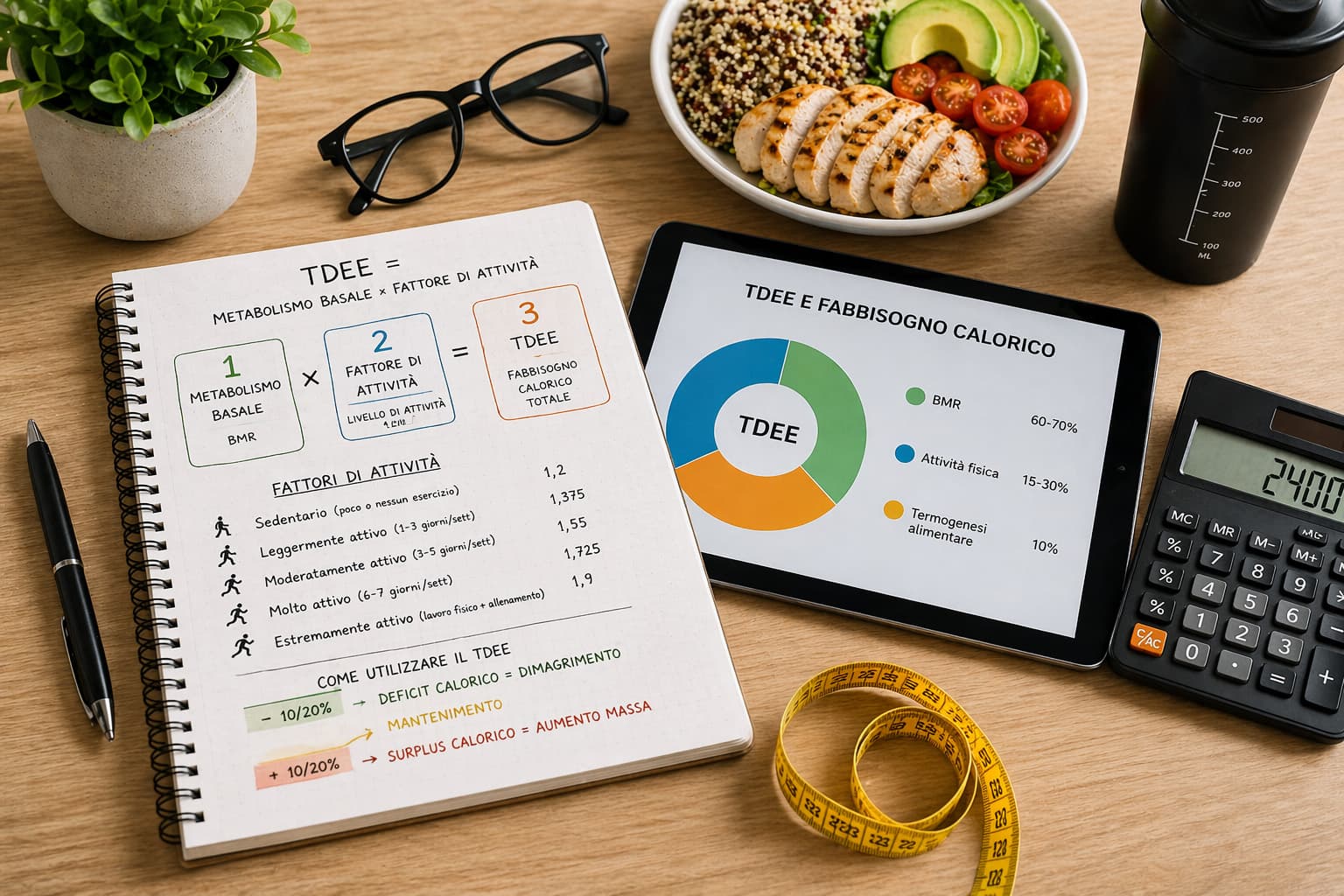
Molte persone cercano "quante calorie devo mangiare al giorno", ma la risposta corretta dipende da un valore preciso: il TDEE.
TDEE significa Total Daily Energy Expenditure, cioè il totale delle calorie che consumi in una giornata reale.
È uno dei numeri più importanti per dimagrire, mantenere peso o aumentare massa muscolare.
→ Calcola il tuo TDEE gratuitamente con il Calorie Calculator Nutryon.
Cos'è il TDEE
Il TDEE rappresenta il consumo energetico totale giornaliero.
Include:
- metabolismo basale (BMR)
- movimento quotidiano
- passi giornalieri
- lavoro fisico o sedentario
- allenamento
- digestione dei pasti
In pratica: è quante calorie consumi davvero ogni giorno.
Perché è importante
Se conosci il TDEE puoi impostare correttamente:
Dimagrimento
Mangi meno del TDEE.
Mantenimento
Mangi vicino al TDEE.
Massa muscolare
Mangi leggermente sopra il TDEE.
Come si calcola
Il metodo più comune:
1. Calcola il BMR
Usando formula Mifflin-St Jeor.
2. Moltiplica per fattore attività
| Livello attività | Moltiplicatore |
|---|---|
| Sedentario | 1.2 |
| Leggermente attivo | 1.35 |
| Moderatamente attivo | 1.55 |
| Molto attivo | 1.7 |
| Estremamente attivo | 1.9 |
Esempio pratico
Uomo:
- 65 kg
- 175 cm
- 44 anni
- BMR stimato: 1528 kcal
Allenamento 2 volte settimana + passi medi.
Moltiplicatore: 1.5
1528 × 1.5 = 2292 kcal
TDEE stimato: circa 2300 kcal
Cosa fare con questo numero
Per dimagrire
TDEE - 300 / 500 kcal
Esempio:
2300 → 1800 / 2000 kcal
Per aumentare massa
TDEE + 150 / 300 kcal
2300 → 2450 / 2600 kcal
Per mantenere
2300 kcal circa
Perché spesso il TDEE online è sbagliato
Molti calcolatori ignorano:
- passi reali
- NEAT (movimento spontaneo)
- sport intenso
- lavoro manuale
- giornate diverse tra loro
Per questo il TDEE iniziale va sempre verificato nella pratica.
Come validare il tuo TDEE reale
Controlla peso per 14 giorni.
Se peso stabile
Calorie attuali ≈ TDEE reale
Se perdi peso
Sei sotto il TDEE
Se aumenti peso
Sei sopra il TDEE
Errore comune: sovrastimare attività
Molte persone si definiscono "molto attive" ma:
- fanno 2 allenamenti brevi
- 5000 passi
- lavoro seduto
In questi casi spesso il livello corretto è moderato, non alto.
TDEE e smartwatch
Gli smartwatch possono aiutare, ma spesso sovrastimano.
Usali come riferimento secondario, non assoluto.
Meglio combinarli con:
- peso settimanale
- fame
- performance
- progressi reali
Quanto cambia nel tempo
Il TDEE cambia se:
- dimagrisci
- aumenti muscolo
- fai più passi
- cambi lavoro
- migliori allenamento
- invecchi
Per questo una dieta va aggiornata.
TDEE medio indicativo
| Profilo | TDEE medio |
|---|---|
| Donna sedentaria | 1700–2100 |
| Donna attiva | 2100–2400 |
| Uomo sedentario | 2100–2500 |
| Uomo attivo | 2400–3200 |
FAQ
Il TDEE è preciso al 100%?
No. È una stima iniziale da adattare ai risultati reali.
Posso dimagrire senza sapere il TDEE?
Sì, ma conoscerlo accelera il processo.
Il TDEE cambia ogni giorno?
Leggermente sì, in base a movimento e attività.
Se faccio palestra aumenta?
Sì, soprattutto insieme a più massa muscolare e più movimento generale.
Conclusione
Il TDEE è il numero più utile per capire quante calorie ti servono davvero.
Senza questo dato, molte diete sono tentativi casuali.
Con questo dato, puoi costruire un dimagrimento o una fase massa molto più efficace.
Se vuoi un piano che calcoli automaticamente TDEE, obiettivo, macros e distribuzione pasti, Nutryon nasce esattamente per questo.