
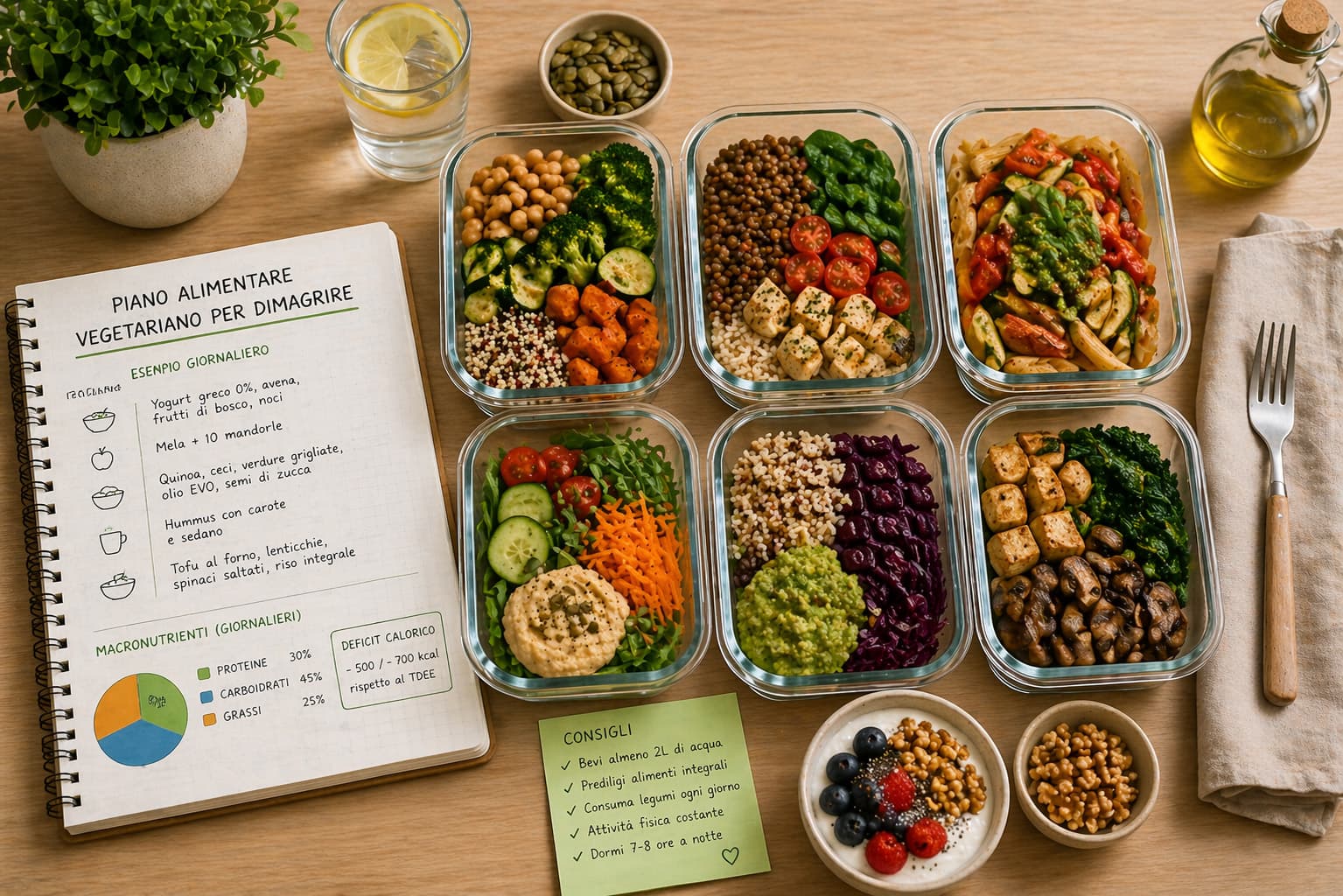
Dimagrire con alimentazione vegetariana è assolutamente possibile.
Per farlo bene, inizia dal tuo fabbisogno calorico reale con il Calorie Calculator Nutryon — gratuito.
Spesso però molte persone commettono due errori opposti:
- mangiare troppo pochi nutrienti
- mangiare troppe calorie da cibi "healthy" ma densi
Serve equilibrio.
Obiettivo reale
Un piano vegetariano efficace per dimagrire deve garantire:
- deficit calorico moderato
- proteine adeguate
- fibre alte
- sazietà
- semplicità pratica
Esempio giornata tipo
Colazione
Yogurt greco o skyr, avena, frutti di bosco
Spuntino
Mela + mandorle
Pranzo
Riso basmati con ceci e zucchine
Spuntino
Skyr oppure frutta
Cena
Uova con pane integrale e insalata
Ottime fonti proteiche vegetariane
- yogurt greco
- skyr
- uova
- legumi
- tofu
- tempeh
- fiocchi di latte
- parmigiano / formaggi magri
- whey se consentita
Calorie indicative
Molte persone dimagriscono con:
| Profilo | Range |
|---|---|
| Donna sedentaria | 1500–1700 |
| Donna attiva | 1700–2000 |
| Uomo sedentario | 1800–2200 |
| Uomo attivo | 2200–2600 |
Errori comuni vegetariani
Troppi carboidrati e poche proteine
Pasta, pane e snack senza equilibrio.
Frutta secca eccessiva
Salutare, ma molto calorica.
Legumi sottoutilizzati
Sono strategici.
Fame continua
Spesso proteine basse.
Come migliorare sazietà
- proteine a ogni pasto
- verdure abbondanti
- cereali controllati
- grassi moderati
- pasti regolari
FAQ
Si dimagrisce meglio da vegetariani?
Non automaticamente. Conta il bilancio calorico.
Posso costruire muscolo da vegetariano?
Sì, con proteine sufficienti.
I legumi bastano?
Spesso sì, se ben distribuiti.
Conclusione
Una dieta vegetariana può essere eccellente per dimagrire se strutturata bene.
Serve attenzione a proteine, sazietà e calorie totali.
Nutryon crea piani vegetariani personalizzati in base a obiettivo, gusti e metabolismo reale.